ASA Compliance Group Brand misuse appeal Since 2016

Amazon flagged brand misuse? We identify which notice route you are actually on before anything is drafted. Brand misuse covers five different notice routes, and the route decides the response.

The notice names one problem. Which route Amazon actually took decides what you are even able to argue.

For cases we accept: we identify the exact notice route, then build the correction, authorization, dispute, or rights-owner response that route requires.

  • The problem An Amazon-generated flag and a rights owner's complaint look similar on the notice and require different channels and evidence.
  • Why appeals fail A trademark registration is offered as the whole answer while the unit does not carry the brand being claimed.
  • What we do Establish the route first, then the source-of-truth brand from the product, then every surface that disagrees with it.

A real person reads your case and replies within about an hour.

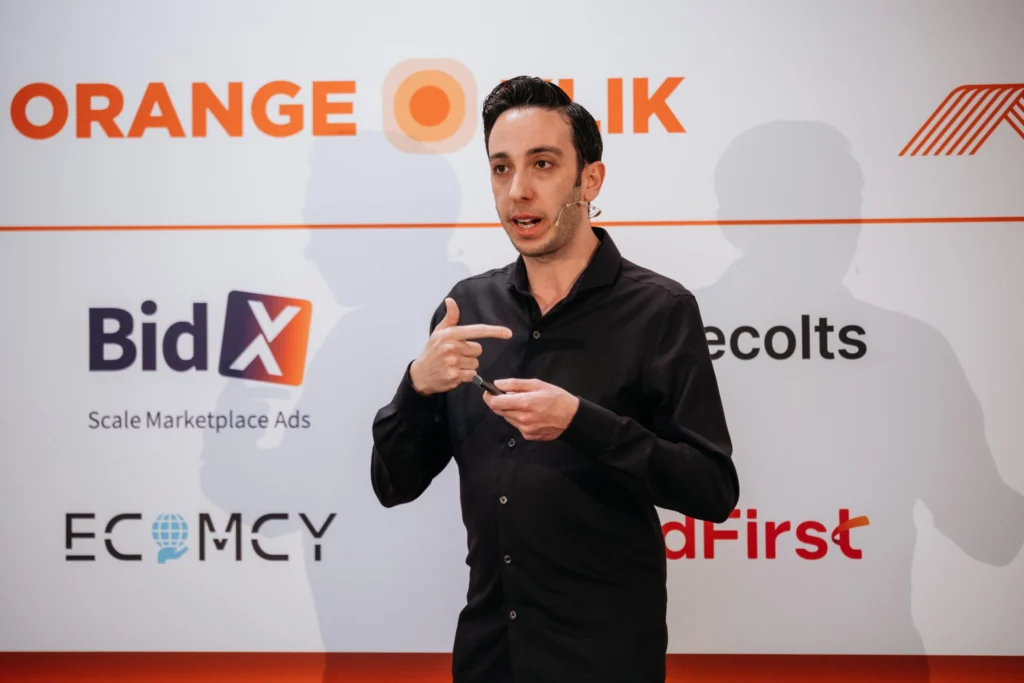
Or Shamosh on stage at the European Seller Conference, Prague, March 2025, speaking about Amazon enforcement and reinstatement
I speak about enforcement; I run appeals in Seller Central every day.

ASA Compliance Group operates Amazon Sellers Appeal. On brand-misuse files we identify the notice route, then either correct the surfaces that are wrong or present the evidence that defends the brand as it stands.

Start here

Paste the notice and the ASIN

Include the brand value Amazon contests, photographs showing the branding on the unit, and any ownership or manufacturing paperwork. Four short steps. Or Shamosh reads every intake.

  • Every case is personally reviewed before we take it on.
  • Most first replies are sent within about an hour.
  • Eligible cases get a written Case Strategy tied to your Performance Notification.
Or Shamosh, Founder and CEO, ASA Compliance Group

Or Shamosh · Founder and lead strategist

5,500+ enforcement cases since 2016. Every intake is personally assessed before acceptance.

Send what you have, including prior DIY or agency appeals. We say what is viable in writing before you commit.

Questionnaire

If the questionnaire does not load, open intake on the account page.

What happens after you submit

  • You’ll receive a review email within about one hour.
  • If Amazon gave you a reply deadline, mention it in the form so we can time delivery to it.
  • If eligible, you receive a written Case Strategy: what is driving the enforcement, what we would argue, what evidence matters, and how we would run Seller Central.

Let's see what it will take to resolve this.

Why we ask: tell us what happened. A real person reviews what you send and replies in writing with your case strategy, including our assessment of the case and the approach we recommend. We also include the fee before you decide whether to proceed. No sales calls.

About 3 minutes. We save your progress as you go.

What happens when we take over
You submit intake; we run the brand-misuse file
YOU Submit intake with the notice, the ASIN, and photographs showing how the product is branded
WE Identify the exact notice route, then establish what that route needs: the authoritative brand, the authorization, or the rights-owner position
WE Run the correction, authorization, dispute or rights-owner response and verify the result
GOAL Either a corrected catalog or a documented defence of the brand as it stands; Amazon decides the outcome
  • Since 2016 · Amazon reinstatement specialists
  • 5,500+ documented cases
  • 98% scoped historical rate
  • Full Seller Central handling for cases we accept

Across ASA’s accepted and fully managed enforcement cases (all notice types we take on), not brand misuse matters alone. Details under Proof.

Knowledge

Which brand notice you received, and what each one takes

Brand misuse arrives by several different routes, and the route decides the response. Sellers reach this page from notices that read similarly and are not the same event at all. Read which one you received before deciding what to send, because a correction filed against a rights-owner complaint does not reach the party who can withdraw it.

An Amazon-generated brand or logo warning
Amazon's own systems flagged suspected trademark or logo misuse. No third party has necessarily asserted anything. The route is correction, or evidence of authorisation where the use is permitted.
A rights owner's complaint
A brand owner submitted a notice against your listing. Correcting the catalog does not remove it: the complaint is recorded against the account. Three routes are open: retraction by the complainant, authorisation or a licence from the rights owner covering the use, or a dispute where the claim is wrong.
A brand-field or generic-product mismatch
The brand recorded on an ASIN does not match the product, or a generic record is being used as a branded one. This is a catalog act rather than a rights claim, and it is the branch the rest of this section works through.
Compatibility wording or a protected term
Another brand's name is used to describe fit, or a protected term appears in the title, bullets or backend keywords. The question is whether the use is permitted and described accurately, not who owns the mark.
An unauthorised catalog contribution
A change was submitted to a record the seller does not control. Here the contested question is authorship and contribution rights, which is why the evidence differs from every route above.

The remainder of this section works through the brand-field and generic-product branch, which is the most common of the five and the one where the catalog evidence decides the outcome. If your notice names a rights owner, the trademark complaint route is the one to read, because retraction and dispute are handled there.

On that branch the contested act is usually one of a short list. Changing the brand attribute on an existing ASIN. Using another brand's name to attract traffic. Listing a branded product as generic. Assigning a private-label brand to goods that do not carry it. Or creating content that misrepresents the manufacturer or a compatibility relationship.

Three questions decide the route, in this order:

The unit

What brand is permanently affixed to the product and its packaging? This is the source of truth everything else is measured against.

The surfaces

Where does the catalog carry a brand? Brand field, title, bullets, images, A plus content, and the backend search terms nobody checks.

The author

Who submitted the contested value, and does the seller control it, or merely have an offer attached to it?

Two boundaries worth stating early, because both are common assumptions and both are wrong. Amazon's generic product policy limits repurposing a generic record into a branded one, so editing the brand field is not a route to a branded page. And Brand Registry enrolment is access, not permission: it does not by itself authorise changing an established ASIN's brand identity.

Triggers

How these cases usually start

Each of these is a different catalog act with different evidence behind it. The notice rarely distinguishes them, so the response has to.

1. The brand field was changed without authority

An established ASIN's brand attribute was edited. The seller may have done it, or a feed, a vendor, or another contributor. Amazon restricts changes to this attribute precisely because it is the field that decides what a record is.

The contribution history separates the cases and the storefront does not show it. Pull it before arguing about who is responsible, because the answer changes the route rather than the burden.

2. A competitor's brand is in the listing

Another brand's name appears somewhere on the record with no defensible descriptive basis. The brand field itself is often correct here, which is why sellers are surprised by the notice.

  • Competitor names in the backend search terms, which customers never see and reviewers do
  • A brand in the title used for traffic rather than to describe the product
  • Compatibility wording that implies manufacture, sponsorship or ownership

Accurate compatibility language is generally permitted. What is being tested is placement and overall impression, not whether the word appears.

3. Generic and branded do not match

Either a branded product sits on a generic record, or a generic product has been assigned a brand. Both are identity mismatches, and where the dispute is really about the unit rather than the catalog entry, it belongs on misbranded product violations instead.

The move that reliably makes it worse is editing an established generic ASIN into a branded one. A genuinely branded product usually needs a correctly created record, which is an ASIN creation question.

4. A private-label brand the product does not carry

The brand is claimed but not permanently affixed to the goods. Amazon's wording here is specific and worth reading literally: it asks for evidence that the product is permanently branded, not evidence that the brand exists.

Answers the question asked
All-side photographs showing branding on the unit and packaging, a manufacturing or private-label agreement, a GS1 record whose licensee matches, invoices naming the model.
Does not
A trademark certificate on its own, a Brand Registry enrolment, or a design file showing what the packaging will look like.

5. Manufacturer and brand attribution conflict

The catalog names one party as the source and the product names another. This is usually a documentation gap rather than a dispute: the relationship is real but has never been written down in a form a reviewer can follow.

Write the chain out explicitly, from manufacturer to seller to brand to identifier to ASIN, with a document at each link. Every one of them should point at the same product.

Appeals

Why DIY brand-misuse appeals get rejected

Reviewers are looking for the authoritative brand and a corrected catalog. Most rejected responses supply ownership documents and leave the catalog as it was.

Registration as the whole answer

A trademark record is provided while the physical product does not display the brand being claimed. Those are different questions.

One surface corrected

The brand field is fixed and the title, images, A plus content and backend search terms still carry the old value.

Blame without a record

Another contributor is named, with no contribution history and no account of the seller's own offer against the ASIN.

Competitor names left in place

Brand keywords remain in the backend terms while the response argues about the visible listing.

Editing during the appeal

The brand field is changed again mid-review, outside the proper catalog or Brand Registry route, which reads as a second unauthorized act.

The same paragraph repeated

A general brand statement restated under several headings, never naming the specific catalog act Amazon contested.

The file

What a correct brand-misuse file usually contains

Establish the brand the product carries, then find every place the catalog disagrees. The second half is where most files are incomplete.

Diagnosis

Record the exact violation, the ASIN, the contested brand attribute, the marketplace, and both the current and historical listing content. Then name which of the catalog acts is actually at issue, because the evidence differs completely between a brand-field change and a competitor keyword.

Photograph the product and its packaging on every side, showing the brand as permanently affixed, along with the manufacturer, model and identifiers. This is the source of truth the rest of the file is measured against.

The surface audit

A brand can be wrong in more places than the brand field, and a correction that misses one is not a correction. Check each of these and record the current value against the target value:

  • The brand attribute itself
  • Title, bullets and product description
  • Main and secondary images, including text rendered inside the image
  • A plus content and any brand-story module
  • Backend search terms, which customers never see
  • Variation relationships, where a parent can carry a brand of its own
  • Any syndicated feed or advertising source pushing content in

The backend terms are the surface most often forgotten, and on a competitor-keyword case they are usually the whole allegation.

The brand basis

Where the seller is asserting the brand, the file needs the relationship rather than the registration alone: manufacturing or private-label agreement, brand ownership or authorization, the GS1 record, and invoices that name the same brand, model and identifiers.

Each document should point at the same product. A trademark proves a mark exists and who holds it. It does not prove the units in the fulfilment centre carry that mark, and that is the gap Amazon is usually testing.

The correction, and what state it is in

Catalog work runs through prepared, uploaded, processed and live-verified. An accepted processing row is not a live page, and a live title is not a corrected backend. Report each surface in the state it is genuinely in. The same four states govern any detail page correction.

Where the mismatch is with the physical unit rather than the record, the lane is misbranded product violations. Where a protected mark is being asserted by its owner, it is trademark infringement, which has its own routes and its own evidence.

Have ready when you submit intake

  • The exact notice text and the ASIN it names
  • The contested brand value, current and previous
  • All-side photographs showing branding on the unit and packaging
  • Trademark, Brand Registry or GS1 records where they apply
  • Manufacturing or private-label agreements
  • Contribution history and any Category Listings Report
  • Every prior appeal, case and Amazon reply

If a link in the chain does not exist, say so. A stated gap can be worked with; an authorization letter written for the occasion cannot be withdrawn from the case log.

Proof

Documented outcomes

Scoped historical outcomes on cases we accepted and fully managed. One seller voice below; deeper galleries live on account reinstatement.

Since 2016 Amazon reinstatement specialists
5,500+ Documented enforcement cases
98% Scoped historical reinstatement rate
Seller Central We run the appeal for cases we accept
What the 98% figure means (population, success, review)

Population: historical cases ASA accepted and fully managed (we prepared the compliance response and ran follow-ups in Seller Central). The figure combines reinstatement and restoration work across notice types in that managed population, not brand misuse matters alone. Declined intakes and self-serve template buyers are not in the rate.

Success: reinstatement or restoration of the privileges Amazon had restricted for that file (account, listing, verification, funds, or related, depending on the case). Amazon decides every outcome; the rate is not a guarantee for future cases.

Review: the underlying records were independently reviewed. Verified as of .

More methodology context and galleries: account reinstatement proof.

“In less than 24 hours after the appeal, my account was reactivated with all products available for sale.”

Alex Huditan · Seller · Account reactivated

More outcomes and video proof: account reinstatement proof.

FAQ

For sellers who already have the Performance Notification. Broader questions: full FAQ library.

Is brand misuse the same as trademark infringement?
Not necessarily. Brand misuse usually concerns an inaccurate or unauthorized brand value, brand association, or branded catalog contribution. Trademark infringement concerns the use of a legally protected mark. The response depends on the route. A catalog route reconciles the ASIN's brand field, the physical product and packaging, the identifiers and the contribution history. A rights-owner complaint, a logo warning or a compatibility allegation is answered instead through Amazon's trademark policy and, where use was permitted, a letter of authorization.
Can I change an ASIN from generic to my brand?
A generic ASIN should not be turned into a branded product by editing the brand field. Establish whether the existing record accurately represents the physical product and whether Amazon permits the attribute change at all. A genuinely different branded product usually needs a properly created record rather than a transformed one.
What if another contributor changed the brand?
Document the prior and current values, the contribution history, the physical product and packaging, the GS1 or manufacturer records, and each attempted correction. Identify the authoritative value and who owns the escalation. Another contributor's action can explain the problem, and the appeal still needs proof of the correct product identity now.
Can I mention a compatible brand?
Compatibility wording can be appropriate when it is accurate, follows Amazon's accepted format, keeps the other brand out of the ASIN's brand field, and does not imply manufacture, sponsorship or ownership. Review the title, bullets, images, packaging and backend attributes together, because placement and overall presentation drive the analysis.
What documents connect my private-label brand to the product?
The ones that establish the whole relationship: brand ownership or trademark where relevant, a manufacturing or private-label agreement, invoices, authorization, packaging and label photographs, model and identifier records, GS1 data, and the seller-to-manufacturer mapping. Each should point at the same product, brand and ASIN.
What do you need to start?
The notice text and the ASIN, the brand value Amazon contests, photographs showing how the unit is branded, any ownership or manufacturing paperwork, and every prior appeal or Amazon reply.
What is in the Case Strategy?
For eligible cases: what we think the authoritative brand is and why, every catalog surface currently carrying the wrong one, and for each either the correction route or the evidence that defends it as it stands, with how we would verify the live listing afterwards. Amazon’s decision is never guaranteed.

Send the notice. Get the strategy.

If Amazon flagged brand misuse or locked the brand field, start with the questionnaire.

Listing removed rather than mis-described: listing reinstatement. Other notice names: all suspension types.