ASA Compliance Group Product safety appeal Since 2016

Amazon raised a product-safety concern? We determine whether the case is document-led or incident-led. We establish which of the three paths you are on, then build the evidence that one needs.

A paperwork request and an injury investigation can read almost identically. They are not the same case.

For cases we accept: which path the notice is on, the report to product mapping, incident evidence where there is one, and containment with records.

  • The problem A document request, a customer incident and a recall are three different cases that arrive in similar words.
  • Why appeals fail A genuine test report is sent that does not cover this model, this standard, or this age grade.
  • What we do Establish the path, map every document to the exact product, and investigate the incident where the case is actually about one.

A real person reads your case and replies within about an hour.

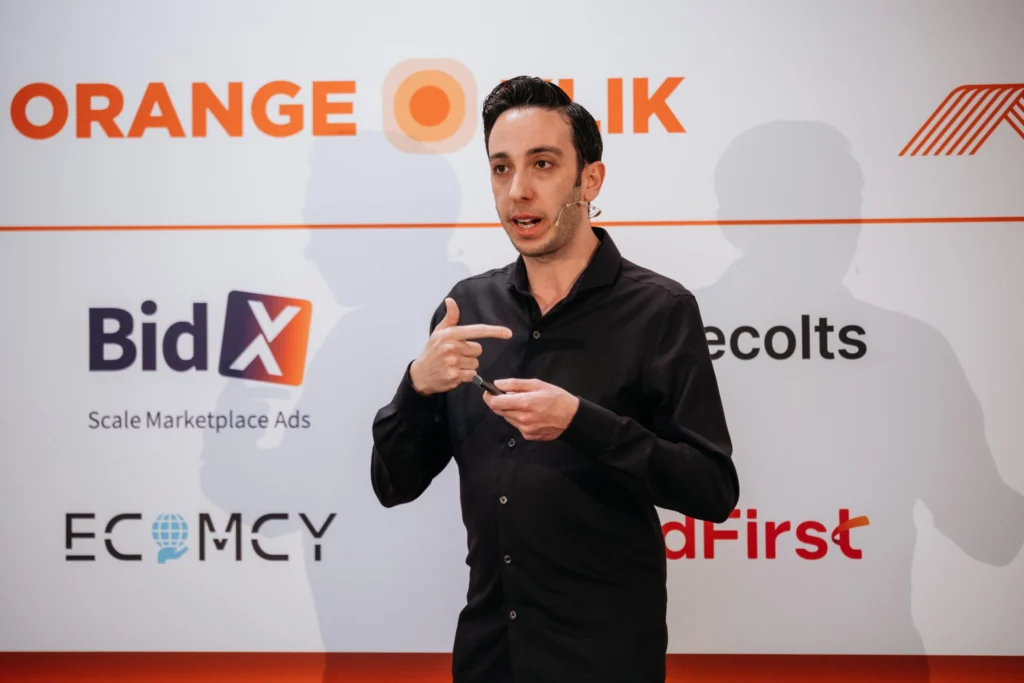
Or Shamosh on stage at the European Seller Conference, Prague, March 2025, speaking about Amazon enforcement and reinstatement
I speak about enforcement; I run appeals in Seller Central every day.

ASA Compliance Group operates Amazon Sellers Appeal. On safety files we identify the path, map the evidence to the product, and run the submission in Seller Central. We are not a testing laboratory.

Start here

Paste the notice and the ASIN

Include what Amazon asked for, whether an incident is involved, and any reports already rejected. Four short steps. Or Shamosh reads every intake.

  • Every case is personally reviewed before we take it on.
  • Most first replies are sent within about an hour.
  • Eligible cases get a written Case Strategy tied to your Performance Notification.
Or Shamosh, Founder and CEO, ASA Compliance Group

Or Shamosh · Founder and lead strategist

5,500+ enforcement cases since 2016. Every intake is personally assessed before acceptance.

Send what you have, including prior DIY or agency appeals. We say what is viable in writing before you commit.

Questionnaire

If the questionnaire does not load, open intake on the account page.

What happens after you submit

  • You’ll receive a review email within about one hour.
  • If Amazon gave you a reply deadline, mention it in the form so we can time delivery to it.
  • If eligible, you receive a written Case Strategy: what is driving the enforcement, what we would argue, what evidence matters, and how we would run Seller Central.

Let's see what it will take to resolve this.

Why we ask: tell us what happened. A real person reviews what you send and replies in writing with your case strategy, including our assessment of the case and the approach we recommend. We also include the fee before you decide whether to proceed. No sales calls.

About 3 minutes. We save your progress as you go.

What happens when we take over
You submit intake; we run the safety file
YOU Submit intake with the notice, what was requested, and any incident or reports involved
WE Establish which path the case is on and what that path actually requires
WE Map the evidence to the exact product, contain what needs containing, and submit
GOAL Evidence that matches the requirement; Amazon decides the outcome
  • Since 2016 · Amazon reinstatement specialists
  • 5,500+ documented cases
  • 98% scoped historical rate
  • Full Seller Central handling for cases we accept

Across ASA’s accepted and fully managed enforcement cases (all notice types we take on), not product safety matters alone. Details under Proof.

Knowledge

The three different product-safety paths

A safety notice can come from a scheduled document request, a customer incident, a regulatory alert, a recall, a test failure, a listing claim, or a mismatch between the listing and a submitted record. These are not the same case, and treating them alike is the most expensive mistake available here.

Which path you are on decides everything after it:

Document-led

Amazon wants records for a product it has no specific concern about. The work is matching the right documents to the exact product.

Incident-led

Something happened to a customer. There is a factual investigation to run, and paperwork alone will not close it.

Recall-led

A regulator or the brand has acted. Scope, affected population, communications and corrective action control.

The distinction is not cosmetic. A document-led case closes on a correct report. An incident-led case treated as paperwork reads as minimising a hazard, which is a worse position than the original finding and is hard to recover from.

On the document-led path, a technically valid report can still be unusable. For covered categories Amazon runs the testing itself rather than accepting whatever arrives: the request appears under Verify Your Product, the seller selects an Amazon-approved provider, and the test is booked through Request Lab Service. There is an issue-by date on the request and a lead time at the provider, and those are separate clocks. The provider may need to submit the result directly, in which case a copy uploaded by the seller does not count as submitted. A report that is correct on its own terms but was produced outside that workflow is the most common reason a well-prepared safety file is rejected.

Where the requirement itself is wrong, the appeal is a different one. If the product is out of scope for the rule being applied, or the category is misassigned, that is raised through Manage Your Compliance rather than by testing a product that never needed the test. Sending a report answers the request; it does not contest it.

Two neighbouring lanes share evidence with this one. Where the product is ineligible rather than untested, it is restricted products; where the documents at issue are regulatory records rather than test reports, it is FDA compliance.

Amazon's safety and compliance framework, its investigation expectations and its recall and stop-sale requirements cover the three respectively. Where a hazard may exist, reporting duties and legal exposure belong with qualified counsel rather than with an appeal.

Triggers

How these cases usually start

The first three are paperwork; the last two are not. Reading which you have is the whole of the early work.

1. A scheduled compliance request

Amazon asks for documents for a category it verifies routinely. Nothing has gone wrong. The task is supplying records that match the exact standard, document type, product, model, age grading and marketplace.

These are lost on matching rather than on merit, which is why the next branch is the common one.

2. A document that does not cover the product

The report is genuine, from a real laboratory, and does not cover this. Wrong model, wrong standard or edition, wrong age grade, different materials, different applicant, expired, or a variant the testing never included.

  • A report for the parent model in a range
  • A standard superseded since the testing was done
  • An age grade that does not match how the product is sold
  • A certificate without the underlying qualifying report

For children's products the certificate and the report are different documents doing different jobs: see CPSC's own material on the children's product certificate and the general certificate of conformity.

3. Missing labels or warnings

The product is compliant and its physical marking is not. Tracking labels, warnings, age grading, manuals. This is usually fixable, and the fix is physical, so inventory already produced has to be part of the answer.

4. A customer safety incident

An injury, a fire, a choking event, a contamination. The case now contains a factual investigation, and the paperwork path is no longer sufficient on its own even if all the documents are perfect.

What a compliance certificate shows
That a product met a standard when it was tested, on the units tested.
What an incident asks
What happened to this unit, whether it can happen again, how many are affected, and what has been done about them.

Preserve the complaint, the order, the returned unit, the batch, photographs and the communications. Where injury is involved, reporting and recall duties are a legal question for qualified counsel and not something to reason about from an appeal template. And blaming the customer, here of all places, is the worst available move: it is unverifiable and it reads as an attitude to hazard.

5. A recall or regulator action

A regulator, the brand or the manufacturer has acted. The scope of that action, the affected population, the inventory position, the communications and the corrective steps are the case, and Amazon's requirements run alongside the regulator's rather than instead of them.

Where a defect complaint has not become a safety matter, it stays on defective item complaints. The line is whether the failure could cause harm, not how many people complained.

Appeals

Why valid-looking reports get rejected

Reviewers are checking that a specific document covers a specific product. Genuine reports fail that test routinely.

The report covers something else

A different model, standard, edition, age grade, material, applicant or manufacturer than the product actually sold.

Certificate without the report

A certificate supplied where the underlying qualifying laboratory report was also required. They are different documents.

An incident treated as paperwork

An injury, fire or contamination answered with compliance records, which reads as minimising rather than investigating.

Documents that cannot be verified

Edited, partial, expired or unreadable records. Originals are checkable, and anything else ends the review.

Actions claimed, not evidenced

Product changes, recalls, customer outreach or inventory segregation described as done with no records showing it.

Resubmitting during a review

Repeat submissions while an internal investigation is open, which can interrupt the review rather than advance it.

The file

What a correct safety file usually contains

Establish the path first. The evidence that follows is different for each one, and there is no bundle that covers all three.

Diagnosis

Record the exact request, the listing, the product category, the marketplace, any deadline, the rejection reason if there is one, and above all whether an incident is involved. That last fact changes the register of the whole response and it is sometimes not stated in the notice at all.

Then the product: photographs of the item and packaging, model and codes, manufacturer and importer details, labels, warnings, manuals, batch or lot information and age grading. Most document mismatches become visible the moment these sit beside the report.

Mapping the document to the product

This is where most document-led cases are actually decided. Compare each field of the report against the product as sold:

  • Model, code and any variant covered
  • The standard and its edition
  • The testing date, and anything changed since
  • Materials, components and construction
  • Age grading and intended user
  • Applicant, manufacturer and laboratory scope

Where a report covers a family rather than one item, show the matrix: shared construction, materials, components and manufacturer. Visual similarity establishes nothing, and asserting coverage the laboratory did not give is a document integrity problem rather than an argument.

Where there is an incident

The complaint, the order, the returned unit, the batch or lot, photographs, the failure mode, any engineering analysis, the complaint history and the communications. Then containment: what was quarantined, stopped, removed or recalled, over what population, and with what records.

State what the evidence supports and what remains open. Declaring a product safe before the investigation supports it is the fastest way to lose credibility on everything else in the file, and regulatory or reporting conclusions belong with qualified counsel.

When Amazon says no action is needed

Sometimes the reply is that an internal review is open and nothing further is required. That is information rather than a resolution, and the correct response is usually to monitor rather than to submit again. Repeat submissions can interrupt an active review.

An at-risk account-health warning alongside it is a separate signal about the account, not a diagnosis of the safety matter. Reading it as one produces a response aimed at the wrong problem.

Have ready when you submit intake

  • The exact request, deadline and any rejection reason
  • Whether a customer incident is involved
  • Product and packaging photographs, all sides
  • Model, codes, manufacturer and importer
  • Labels, warnings, manuals and age grading
  • Any reports or certificates already submitted
  • Every prior appeal, case and Amazon reply

If a report was rejected without a stated reason, send it anyway with the product details. The mismatch is usually identifiable on comparison.

Proof

Documented outcomes

Scoped historical outcomes on cases we accepted and fully managed. One seller voice below; deeper galleries live on account reinstatement.

Since 2016 Amazon reinstatement specialists
5,500+ Documented enforcement cases
98% Scoped historical reinstatement rate
Seller Central We run the appeal for cases we accept
What the 98% figure means (population, success, review)

Population: historical cases ASA accepted and fully managed (we prepared the compliance response and ran follow-ups in Seller Central). The figure combines reinstatement and restoration work across notice types in that managed population, not product safety matters alone. Declined intakes and self-serve template buyers are not in the rate.

Success: reinstatement or restoration of the privileges Amazon had restricted for that file (account, listing, verification, funds, or related, depending on the case). Amazon decides every outcome; the rate is not a guarantee for future cases.

Review: the underlying records were independently reviewed. Verified as of .

More methodology context and galleries: account reinstatement proof.

“In less than 24 hours after the appeal, my account was reactivated with all products available for sale.”

Alex Huditan · Seller · Account reactivated

More outcomes and video proof: account reinstatement proof.

FAQ

For sellers who already have the Performance Notification. Broader questions: full FAQ library.

Why did Amazon reject a valid test report?
A genuine report can still be unusable if the laboratory, standard, date, model, age grade, materials, variants, applicant, manufacturer or marketplace does not match the requirement. Compare every field of the report against the listing and the physical product, then supply the missing model linkage or arrange updated testing where the gap is real.
Is a certificate enough without the laboratory report?
For children's products a certificate normally summarises the applicable rules and identifies the supporting third-party testing; it does not replace the underlying report where Amazon asks for both. The exact package depends on the product type, marketplace, standards, age grading and the current requirement, and every document should map to the listing.
What changes when a customer incident is involved?
An incident adds a factual safety investigation beyond document review. Preserve the complaint, order, returned unit, batch, photographs and communications, contain affected inventory where that is justified, evaluate any reporting or recall duty with qualified counsel, and give Amazon a product-specific cause, disposition and evidence record.
Can I submit a report for a similar model?
Only where the report and its supporting technical evidence legitimately cover the exact model or a defined family under the applicable testing rules. Show the variant matrix, the shared construction, materials, components, age grade and manufacturer. Visual similarity does not establish that a report applies to the product being sold.
What if the product was redesigned after testing?
Assess whether the change touches materials, components, construction, dimensions, age grade, intended use or the tested safety features. Obtain a laboratory or qualified compliance determination on continued coverage and retest where required, then keep change-control records mapping the tested version to current inventory and the listing.
What do you need to start?
The exact request and any deadline, whether an incident is involved, product and packaging photographs, model and manufacturer details, any reports already submitted, and every prior appeal or Amazon reply.
What is in the Case Strategy?
For eligible cases: which of the three paths we think you are on, where the document and the product diverge, what an incident would require beyond paperwork, and what needs qualified review rather than ours. Amazon’s decision is never guaranteed.

Send the notice. Get the strategy.

If Amazon requested safety documents or opened an investigation, start with the questionnaire.

Listing removed rather than mis-described: listing reinstatement. Other notice names: all suspension types.